
Why acquisitions fail—and why the operating model matters more than the deal model.
An acquisition can make your business bigger without making it better.
Revenue increases. EBITDA grows. New customers arrive. Geographic coverage expands. The investment case looks compelling.
But twelve months later, the management team is overwhelmed, systems remain disconnected, anticipated synergies haven’t materialized, and the acquired business is consuming far more attention than anyone expected.
You bought growth. But you also bought complexity.
And that complexity may be destroying the very value you intended to create.
Why Acquisitions Fail
Research into acquisition performance has repeatedly identified familiar problems: overestimated synergies, cultural incompatibility, inadequate integration planning, weak execution, and management distraction.
But these aren’t necessarily five independent problems. Often, they are manifestations of the same underlying issue: the acquirer never fully understood what it would take to operate the combined business successfully.
Synergies are included in valuations before delivery plans are validated. Cultural differences are deferred until after closing. Technology integration is underestimated. Management capacity is assumed rather than tested. Operators inherit commitments they had little role in making.
The financial model may be sophisticated. The operating model may barely exist.
The Complexity Trap
Every acquisition introduces some complexity: new people, processes, systems, customer relationships, and reporting requirements. Complexity is not automatically bad. It may be necessary to enter attractive markets or acquire new capabilities.
The problem is unmanaged complexity that costs more than the value it creates.
An acquisition might add $3 million in EBITDA, yet require duplicative systems, additional management layers, significant integration investment, and years of distraction. It may even increase dependence on a few key executives.
The result can be higher earnings but a less scalable, less transferable business.
Why Traditional Deal Processes Fall Short
Many acquisition processes are designed primarily to complete a transaction: find a target, negotiate, diligence, finance, sign, and close. Each step matters, but closing a transaction is not the same as delivering its investment thesis.
The weakness is often the separation between those approving the acquisition and those responsible for making it work. Integration risks are identified but not translated into acquisition decisions. Boards approve financial projections without sufficient evidence that the organization can deliver the operational outcome.
A Different Approach: The Acquisition Approvals Model
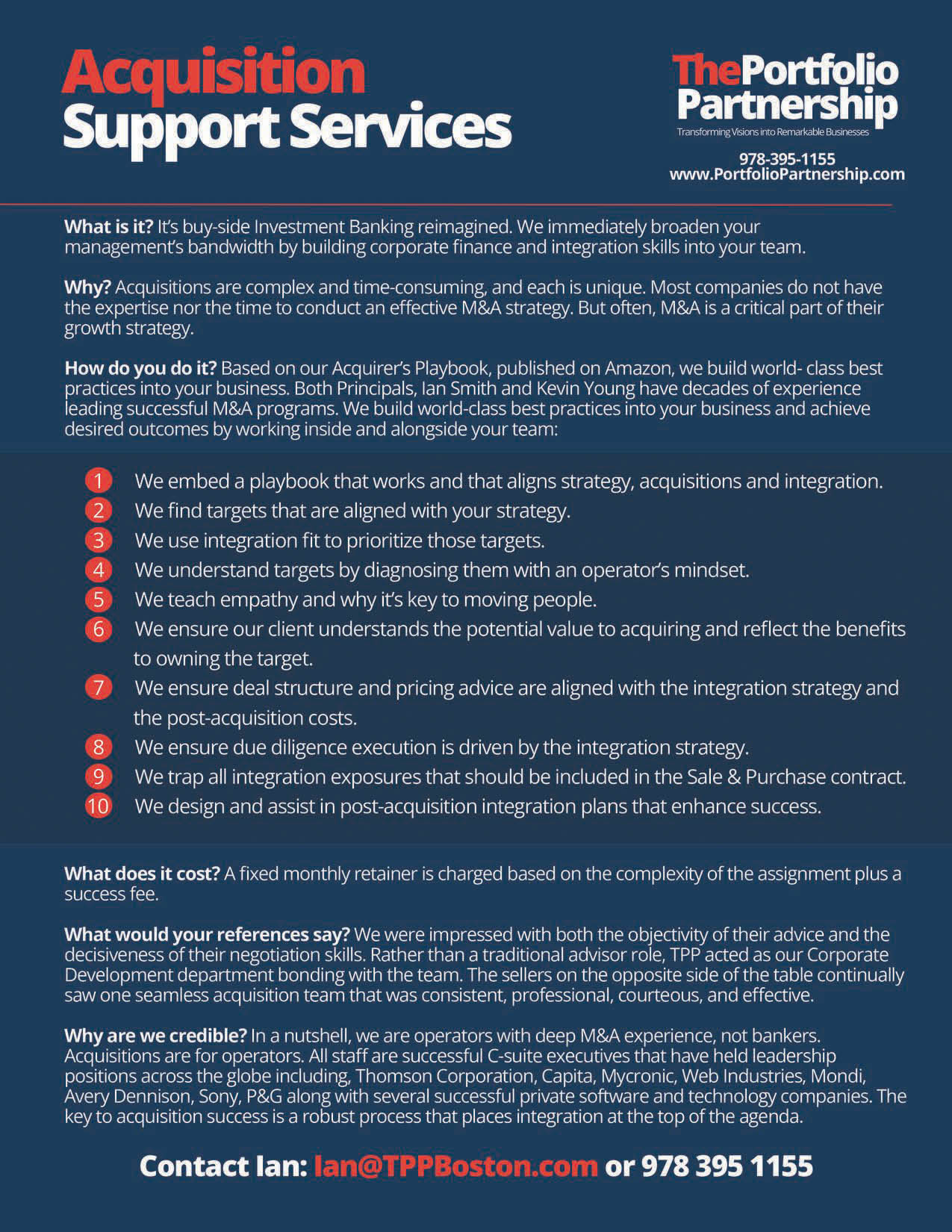
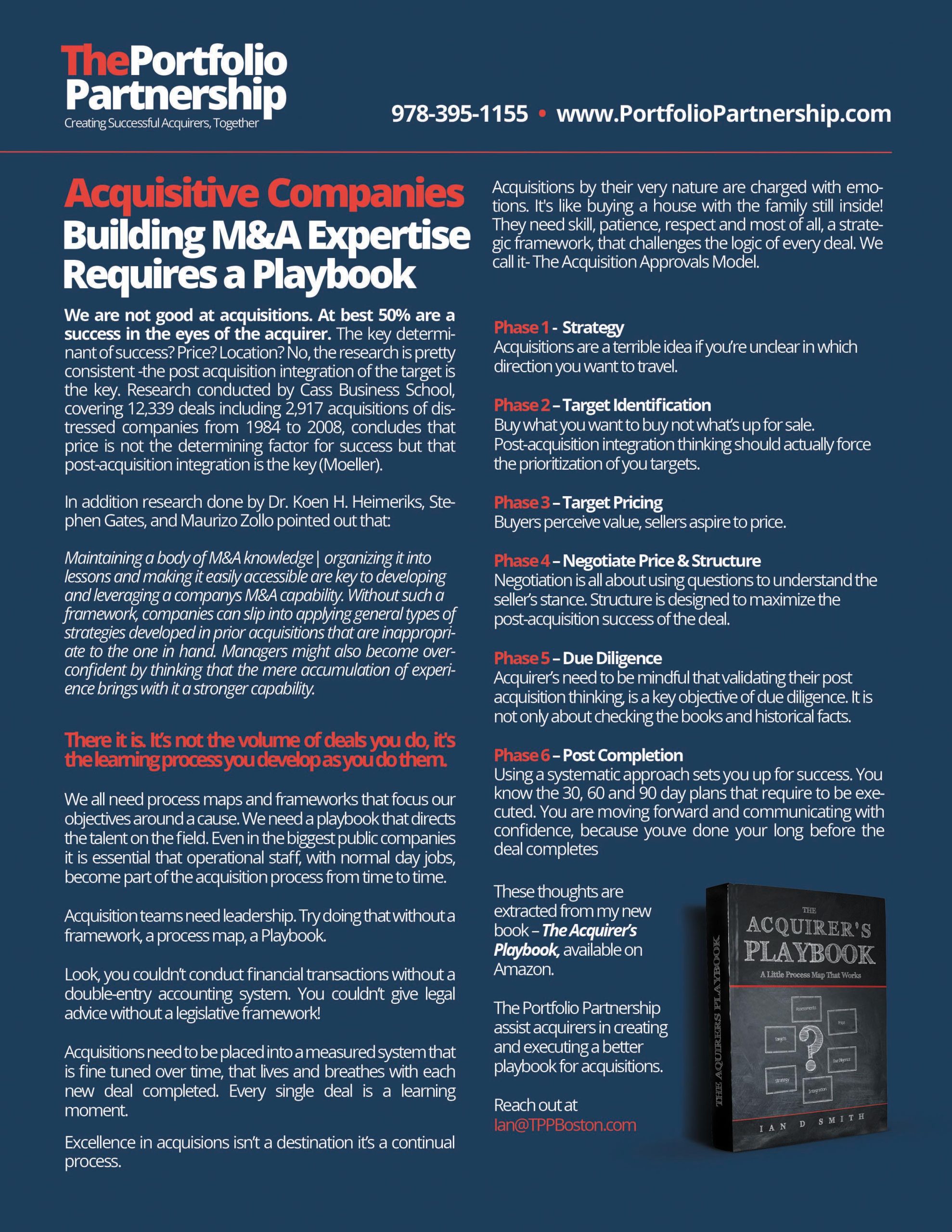
At The Portfolio Partnership, our six-phase, 24-stage Acquisition Approvals Model is built around a different principle: an acquisition should earn the right to progress through evidence, operating readiness, and explicit approval decisions—not transaction momentum.
The model connects acquisition strategy, target selection, valuation, diligence, approval, integration, and value creation into one disciplined, operator-led process.
Value creation does not begin after closing. It must be defined in the acquisition strategy, tested during target evaluation and diligence, reflected in the valuation, and delivered through integration and operational execution.
Five Approval Gates: From Strategy to Signing
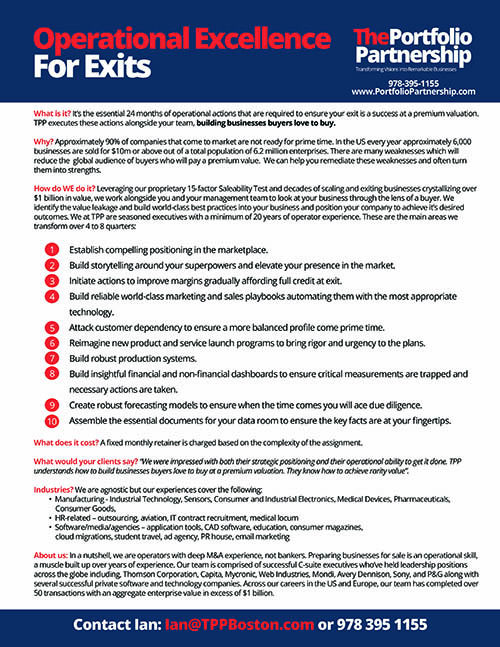
Our Acquisition Approvals Model includes five critical approval decisions. Each demands stronger evidence that the acquisition will create value, that operational complexity is understood, and that the acquirer can deliver the intended outcome.
1. Approve Acquisition Strategy & Profile
Are we clear about what we want to buy and why? This authorizes the search for targets—not contact with sellers or offers.
2. Approve Contact with Priority Targets
Have we identified businesses that fit our strategy and value creation objectives? Is there a credible initial view of operational fit and integration complexity?
3. Approve Pricing Mandate
Does the investment case justify the price we are prepared to pay, accounting for operating risks, integration costs, and realistic value creation?
4. Final Board Approval
Are the negotiated commercial terms, operating risks, and integration plan sufficiently compelling to proceed, subject to due diligence and contractual conditions?
5. Authorize Completion/Signing
Have the final risks, diligence findings, contractual protections, and operational requirements been adequately addressed? Are we authorized to sign and complete on the approved terms?
At every gate, challenge three things: the value we expect to create, the complexity we are accepting, and our capacity to execute. Approval gates are not administrative formalities. They are opportunities to stop transaction momentum from overtaking judgment.
Five approval gates. Five opportunities to challenge the investment thesis, expose hidden complexity, and protect the value we intend to create.
Beyond the formal approval gates, two disciplines are essential to preventing complexity from undermining acquisition value.
Evaluate Operational Fit Before Falling in Love With the Deal
Target selection must go beyond strategic attractiveness and financial performance. Can the business strengthen our operating model? Can we absorb it without overwhelming management? Will it introduce dependencies or complexity that undermine the investment thesis?
Our Saleability Test™ examines 15 value drivers across Positioning, Dependency, Growth, People, and Governance, exposing weaknesses that attractive financial results can conceal.
Make Integration and Value Creation Part of the Investment Decision
Integration is not a project that starts after closing. Our Integration Priorities Register is introduced during target assessment and developed as evidence emerges. It captures operational challenges, dependencies, and actions that affect both the investment decision and the value creation plan.
By the time the Board considers approval, integration and value creation should be central to the investment case—not documents prepared after the deal is agreed.
The Real Test of Acquisition Success
Success is not merely closing the deal or achieving the acquired company’s original EBITDA forecast. Has the combined business become easier to operate and scale? Have dependencies fallen? Are systems and processes more repeatable? Can growth continue without complexity increasing at the same rate? Would a future buyer pay a premium for the business created?
The Acquirer’s Takeaway
Before approving your next acquisition, ask: Are we buying a business that will make our company better—or merely bigger?
If the investment case depends on operational improvements, operators must help define, validate, and deliver them. If the acquisition introduces complexity, understand its cost before committing.
The objective is not to accumulate businesses. It is to build an increasingly valuable enterprise—one that investors want to back, buyers want to acquire, employees want to help grow, and talented people want to join.
Acquisitions are for operators.
Book a chat: Ian@TPPBoston.com
Ian D. Smith CA | Founder & Principal, The Portfolio Partnership | Author, The Acquirer’s Playbook