I recently listened again to an old interview with Warren Buffett explaining how he decides whether to buy a business.
His framework is wonderfully simple.
He looks for four things:
- A business he understands
- It has an enduring competitive advantage
- Run by management he likes and trusts
- It’s available at a reasonably attractive price
And he emphasized price is the least important.
Buffett has repeatedly said that price is the least important of the four because buying a wonderful business at a fair price is usually far better than buying an average business cheaply.
That philosophy has aged remarkably well.
Today we have AI that can screen thousands of companies, identify acquisition targets, summarize financials, and even draft investment memorandums in minutes.
None of that makes you a better acquirer.
Because acquisitions are not won during diligence.
They’re won after closing. They’re won in the two years post closing by executing a successful post-acquisition plan. This is operator work.
Great Acquirers Are Great Operators
One of the best examples is Bradley Jacobs, who has completed more than 500 acquisitions throughout his career.
In an interview with The Wall Street Journal, Jacobs explained:
“Having experience in buying companies, having business experience at running companies and what the integration process is going to be, and using operations people for the M&A team makes us be able to get a deal done very, very quickly—in a fraction of the time that some other buyers may take.”
That’s the lesson many companies miss.
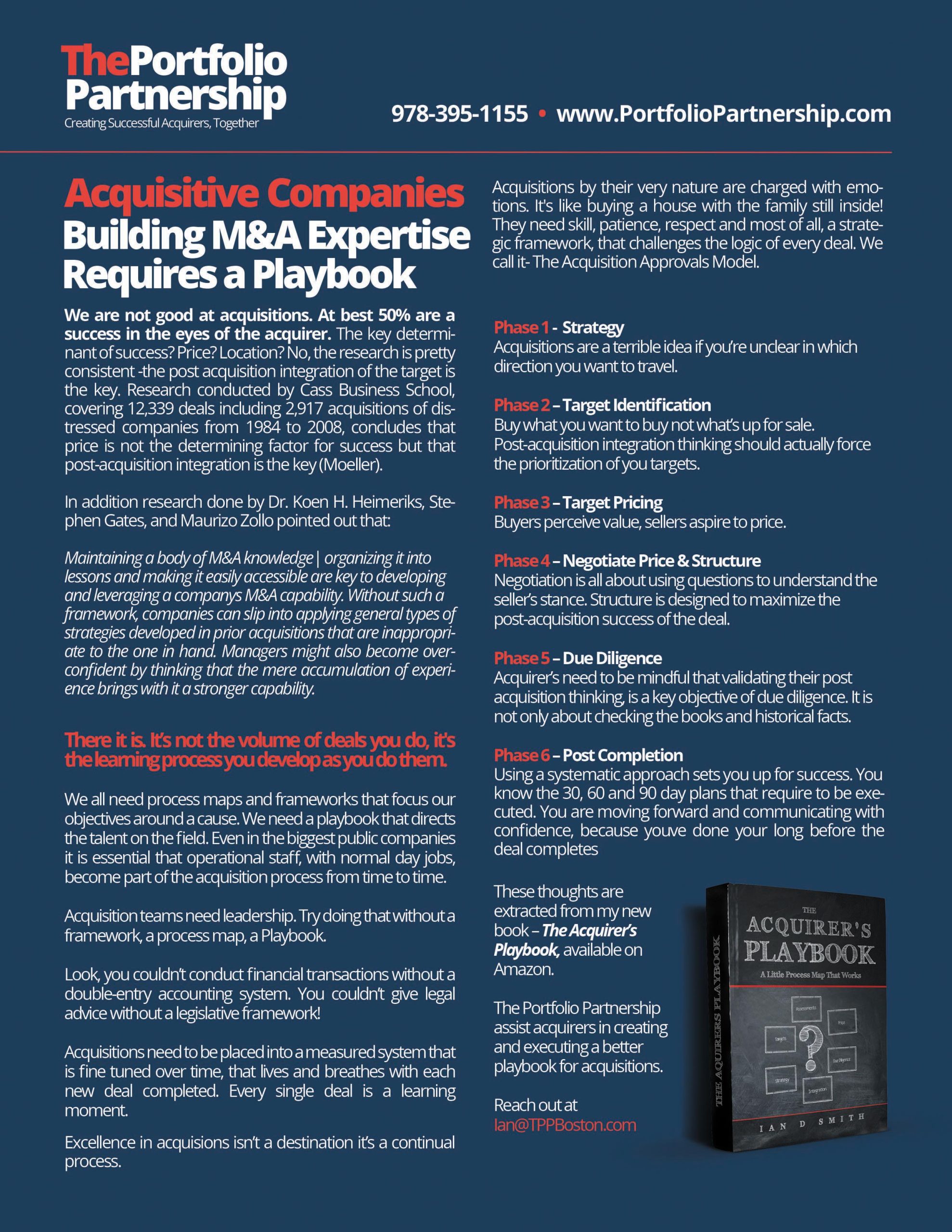
The purpose of an acquisition playbook isn’t simply to manage a transaction.
It’s to bring your best operators onto the field early enough to shape the investment decision.
Financial analysis tells you what you’re buying.
Operational experience tells you whether you can actually own it successfully.
Before You Buy Another Business…….
Ask yourself one question.
Are you already running your own business exceptionally well?
If the answer is “not yet,” acquisitions will probably magnify your problems rather than solve them.
Here are a few questions worth asking. It’s a fitness test.
Strategy
- Is there a compelling strategic reason for making acquisitions?
- Which targets score the highest in fulfilling your strategic goals?
Commercial Excellence
- Is your market positioning genuinely differentiated?
- Is your sales and marketing engine consistently generating quality opportunities?
- Do you have a repeatable customer onboarding process?
Products & Services
- Do you have a disciplined product roadmap?
- Are customers enthusiastic about your offering?
Operations
- Are your KPIs predictable?
- Do you understand the operational drivers behind your performance?
- Can you consistently deliver what customers expect?
Finance
- Can you produce reliable management accounts within days of month-end?
- Does your leadership team use data to make better decisions rather than simply report history?
People
- Can you consistently recruit, onboard and retain exceptional people?
- Could your culture successfully absorb another organization?
Private equity firms understand this.
They don’t simply back companies with acquisition ambitions.
They back management teams that have already demonstrated they know how to run a business.
Then Test Your Acquisition Process
Even outstanding operators need a disciplined acquisition system.
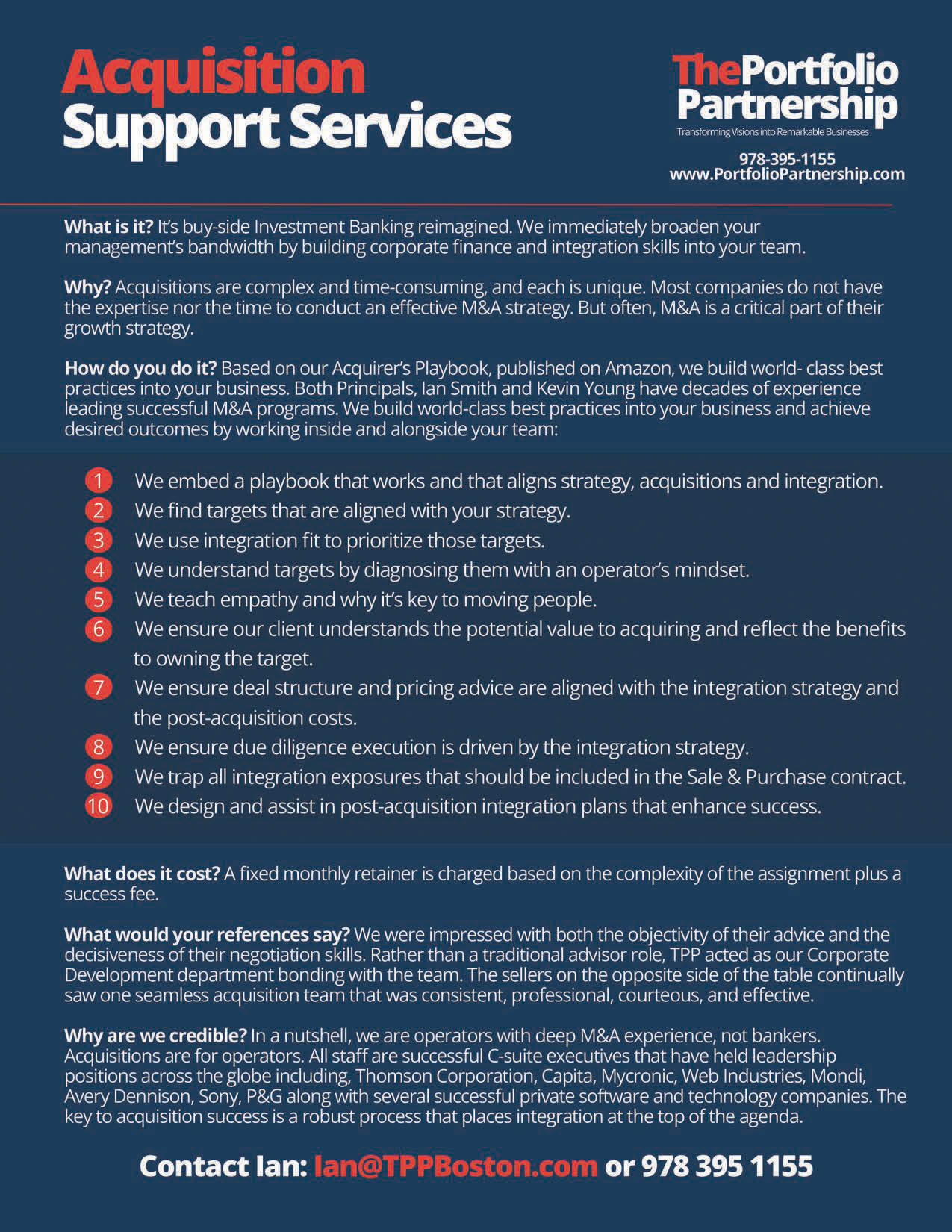
A strong playbook should answer questions like these:
- Does every target fit a clearly defined acquisition strategy?
- Are you identifying the right businesses—not simply the available ones?
- Have you built a robust scoring system to prioritize targets?
- Have you spent time shaping the communication strategy for priority targets? Remember you only get one first impression!
- Are operators leading commercial, operational and cultural diligence?
- Is integration influencing valuation before you make an offer?
- Is due diligence designed to validate your integration strategy—not simply verify historical performance?
- Has the integration plan already been designed before completion?
- Are you using an Integration Management Office to drive the next 12 months?
- Do you review every acquisition afterwards to improve the next one?
The best acquirers don’t just repeat deals.
They improve their system after every deal.
The Real Measure of Acquisition Success
Acquisition success isn’t measured on closing day.
It’s measured two years later.
- Did it fulfil the investment thesis?
- Did you retain customers?
- Did key employees stay?
- Did margins improve?
- Did synergies materialize?
- Did the business become more valuable?
That’s where operators create value.
Our View
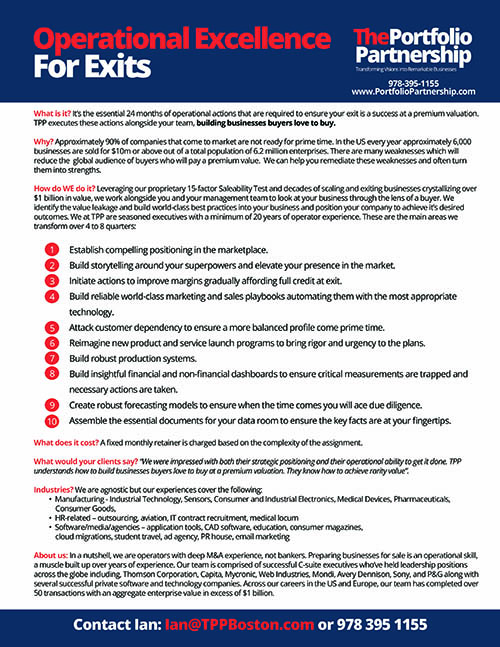
At The Portfolio Partnership, we believe acquisitions are operating challenges disguised as financial transactions.
An acquisition transfers ownership. Operational excellence during post-acquisition integration creates value.
That’s why we work alongside management teams to build acquisition programs—not just complete acquisitions.
Because sustainable acquisition success comes from combining strategic discipline, operational excellence and a repeatable playbook.
Always ready for a conversation – 978 395 1155 or Ian@TPPBoston.com