The Operating Decisions That Transformed the Business
It was early 2002 when I moved the family to Boston from London to sharpen my operator skills and drive the growth of a software business. I had been enjoying fractional operating partner roles since my retirement from Investment Banking after 15 years in 2000
It was a new challenge, a new country and the timing seemed right (might be a different answer from the family).
The Business I Inherited
The products were a niche within a niche. Software tools for Lotus Notes developers! Sold by an inside sales team to developers. Classic demo and short sales cycle. Great products built by a small but talented development team. Award winning software.
Sales growth was strong but at a cost. SG&A had ballooned. There were some expensive players and cost control had not been the main focus. The financial management pack was more spreadsheet than Board ready. KPIs were basic. Marketing and sales kind of blended together. Trade shows were huge and expensive.
The First 90 days.
The highest priority was the production of a timely set of financials and a forecasting model tied to cash generation. Accounts were produced with 5 days of month end with a clear narrative. KPIs were part of the pack especially all balance sheet ratios. Daily cash flow forecasting became the new normal.
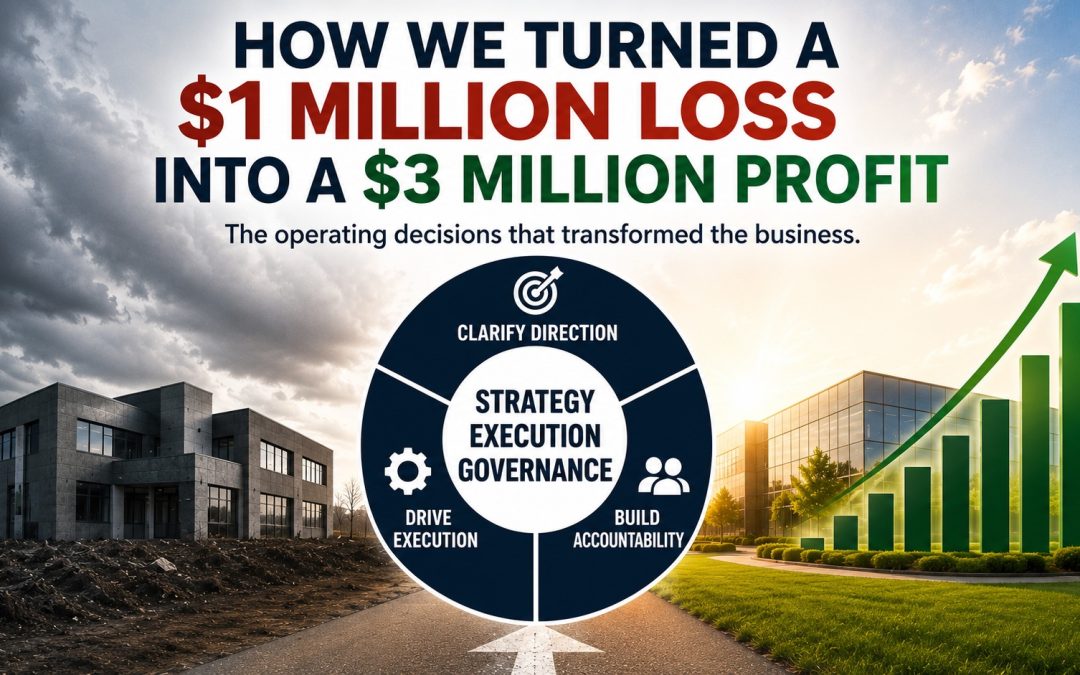
This quickly revealed what we could afford on costs given the projected 2002 loss of $1m.
It was a turnaround. Actions had to be swift and effective. We went into cash preservation mode and cost cutting actions. People were either moved out or their package was reimagined.
Sales targets were changed, incentive schemes were realigned and product bugs were prioritized. The bank and the venture capitalist were brought on side with a strong recovery plan.
Communication with staff became regular and clear despite three time zones.
The Hardest Decisions
Letting people go will always be the hardest part of a turnaround but businesses hemorrhaging cash have no choice. Anything discretionary came under scrutiny especially marketing costs related to trade shows. Which ones could we prove had a decent ROI?
All travel related costs were nailed down which was tough with locations in Boston, UK and Asia and this was before the benefits of Zoom but we did have:
- Weekly executive teleconferences.
- Multi-site leadership meetings by conference call.
- Monthly operational reviews over a conference bridge.
- Occasional video conferences between major offices.
Slowly but surely we reached a breakeven point and allowed ourselves to breath and imagine scaling the business.
How The Culture Changed
Having a near death experience focuses the mind and although senior management can look positive, folk can smell the stress and see the reduction in bonuses and generally across all costs.
We had bought ourselves some time to reimagine the business. We were under no illusion that we were in a legacy business but there was no reason it couldn’t be a cash cow serving a client base that adored us.
Here are some of the initiatives that changed the culture:
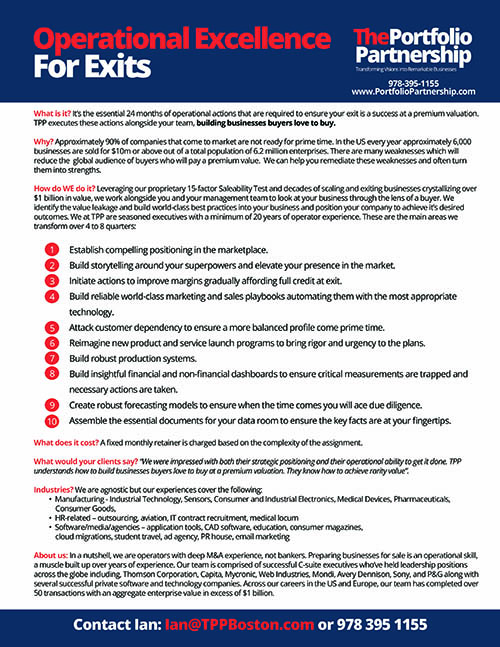
Repositioning – We reimagined the go to market strategy around Governance. Many of the Lotus Notes applications used by our clients were in scope for Sarbanes-Oxley (SOX) so the messaging around our tools regarding control and asset protection resonated.
Pricing model – We deep dived into product profitability and recognized that some products were losing money. The tools were priced around $1000, and so marginal price increases had no impact on volume but transformed our profitability.
Sales Playbooks – We created new processes around Diagnostic Selling, taught our sales team how to open up our clients and cross sell new tools. the process was embedded in our CRM and used worldwide by our 33 inside sales team members.
Marketing Playbooks – We captured what was working and built campaigns with highest probability of success. We aligned the tone of voice with the brand promise and the sales literature. the company developed one way of talking across all customer facing departments, sales, marketing, customer support and within the company.
Roll of Honor – We developed visual cues on sales performance, maintenance renewals and global penetration of accounts.
Enterprise sales– we developed an enterprise sales team to nurture relationships with the C-Suite of our larger customers.
Weighted Pipelines – We created dashboards to allow our sales managers, sales professionals to see the reliability of their weighted sales pipelines, developing roadmaps to success.
Product knowledge – We built testing programs to improve the knowledge of our 10 main tools which identified blind spots even in our best sales people.
Incentive schemes – We changed incentive schemes to ensure that maintenance renewals were well rewarded including sweetening the pot for product sales if maintenance renewals hit targets.
Launched consulting services – We launched a successful consultancy and training business to ensure clients were optimizing our tools, brining in over $2m in sales in the first year.
University – Based on Pixar’s University concept we built a curriculum to teach staff new skills. Accountants were taught marketing, coders were taught finance. Sales were taught marketing. It became a crucial part of staff development. Courses were branded 101, 201, 301 and presenters were recruited from internal leaders. We used our branded University brochure effectively in recruitment to demonstrate our commitment to personal development.
Performance Profiles – We transformed Job Specs into Performance Profiles to ensure every employee had a clear set of performance metrics they were expected to meet.
Profitability
These changes transformed our profit as we Repositioned the business, managed our talent, executed with skill and continually measured the right stuff.
Employees were rewarded, developed and an environment of collaboration developed over time.
These were some of the operational actions we took and gradually our margins improved as we matched Gross Margins with the appropriate SG&A. Staff engagement took off and we were to host annual summits where all staff were present.
Profit was the outcome. Better operating decisions were the cause.
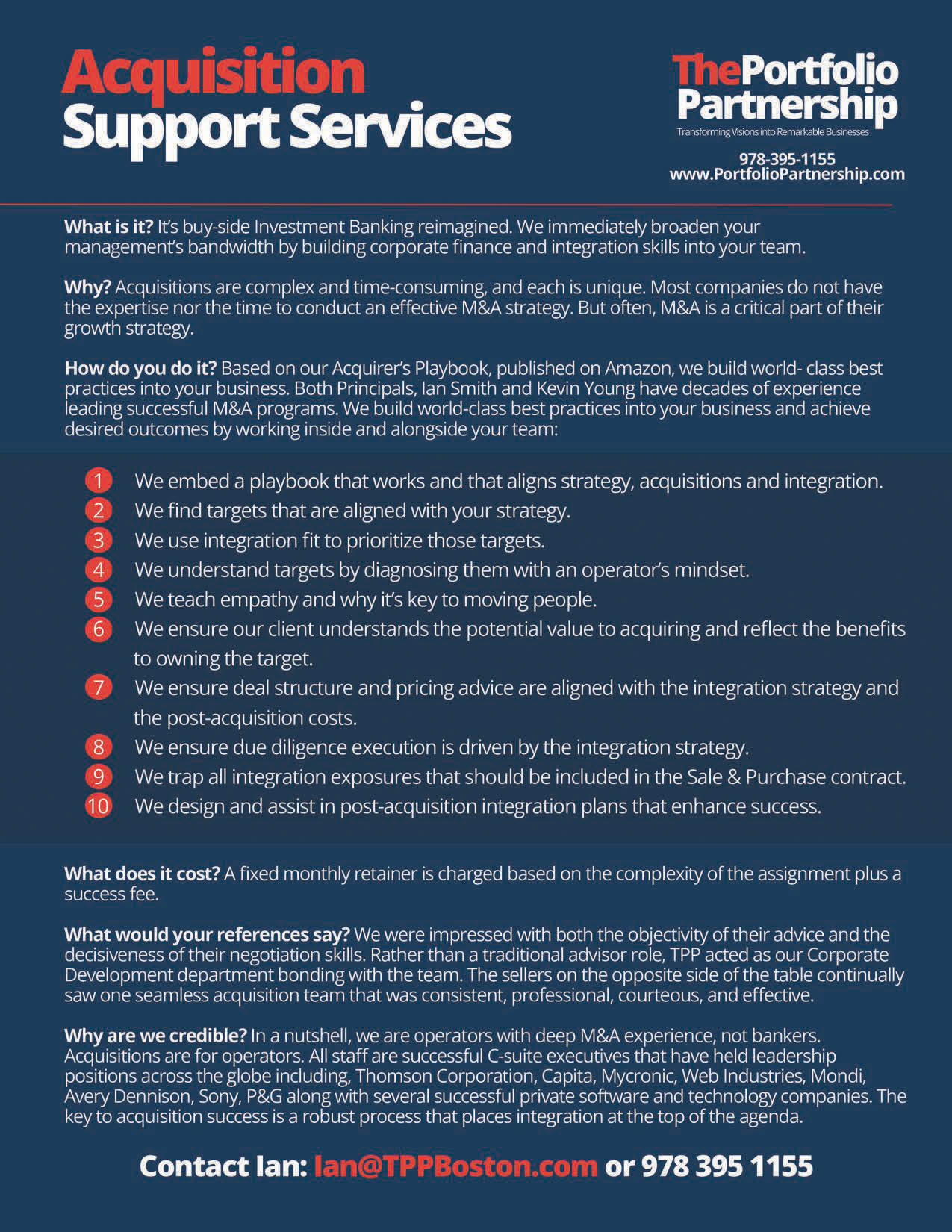
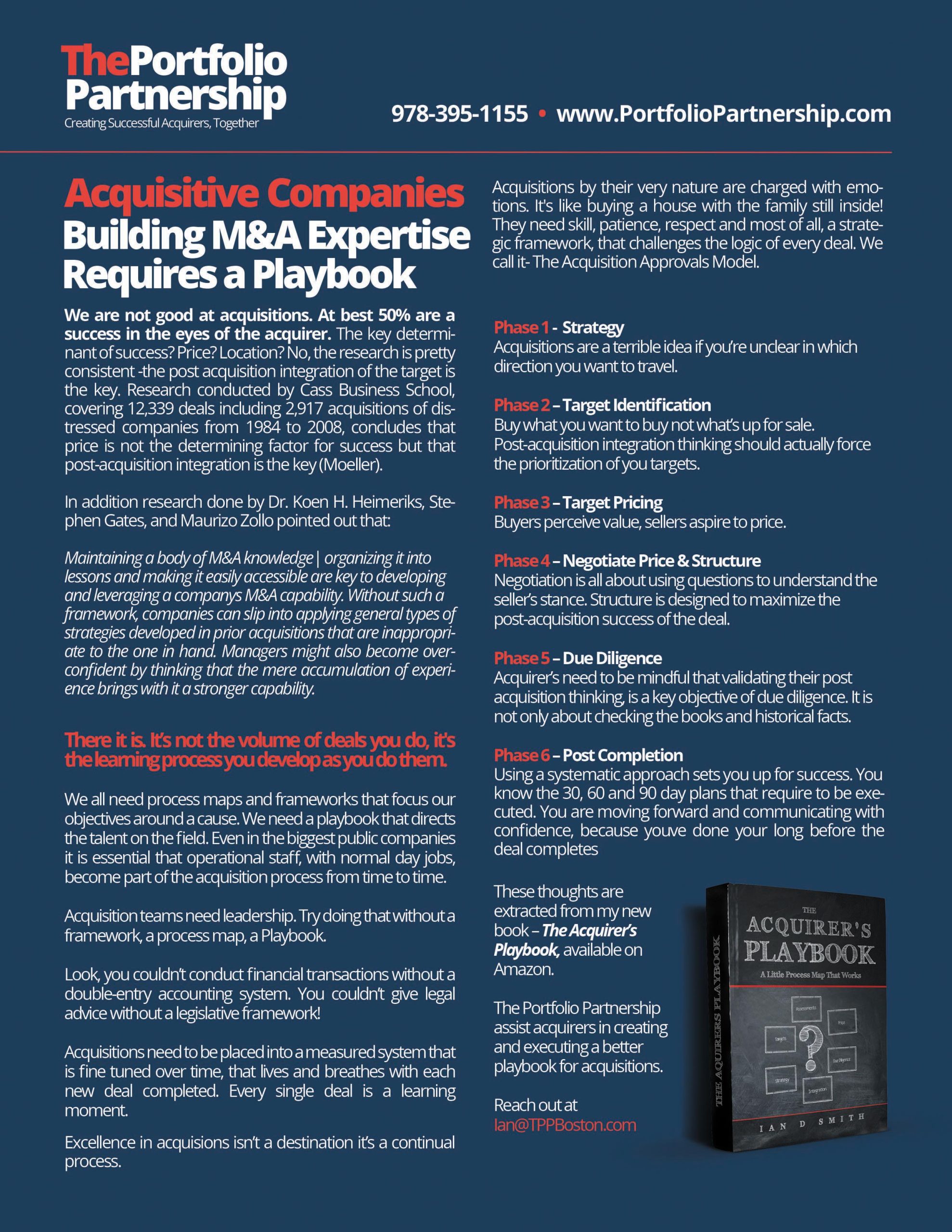
The Best Acquirers Are Operators First
These are the operating skills required to scale a business successfully. They’re also the same skills that separate successful acquirers from the rest. The ability to create value through acquisition isn’t built on deal-making alone. It’s built on strategy, execution, governance, and the operational discipline to integrate, improve, and grow businesses after the transaction closes. In short, if you can scale businesses, you can build acquisition programs that create lasting enterprise value.
Operator skills aren’t learned in the classroom or the boardroom.
They’re earned the hard way—by solving one problem after another, making difficult decisions under pressure, and leading businesses through years of growth, setbacks, and change.
That’s what creates operators. And it’s why the best acquirers are almost always experienced operators first.
Ian@TPPBoston.com