
As the owner of a business, you will inevitably turn to expert resources beyond your internal team. As you assess the type of external resource to deploy it’s worth considering the fundamental difference between a consultant and an Operating Partner to help you.
The fundamental difference is stickiness. A consultant might fix your problem but will it last? An Operating Partner wants to solve the problem involving existing staff and build a protocol around the solution that is sustainable.
For example, in the world of sales, you might deploy a consultant to implement Salesforce. However, the success of the project will depend on the robustness of your sales process. Technology automates a sales process it doesn’t create it. Operating Partners are ex-operators who understand protocols need to be optimized first and then automated. The skillset of the existing staff needs to be considered. The project needs context. This is how Operating Partners think.
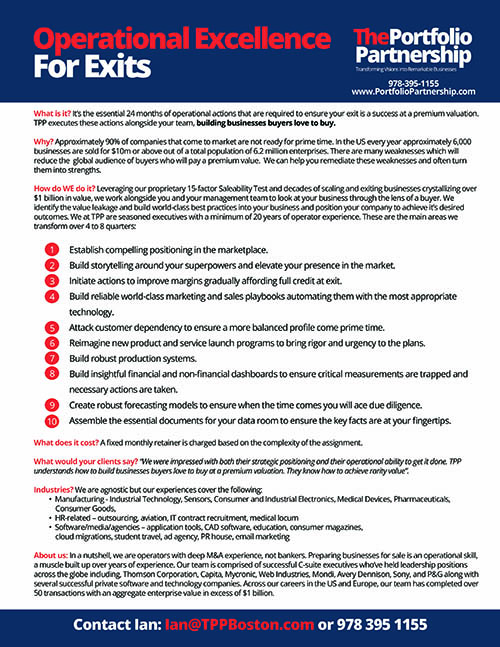
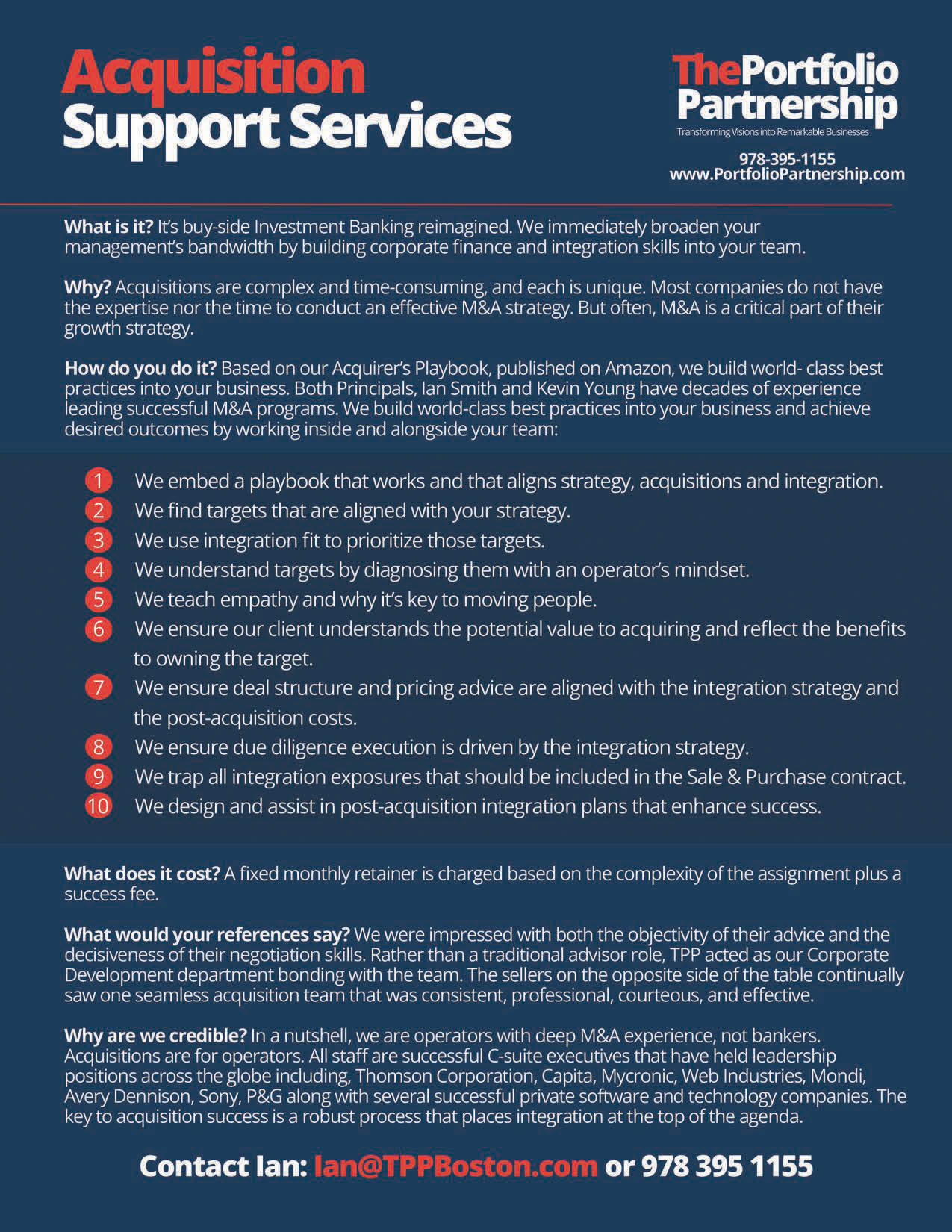
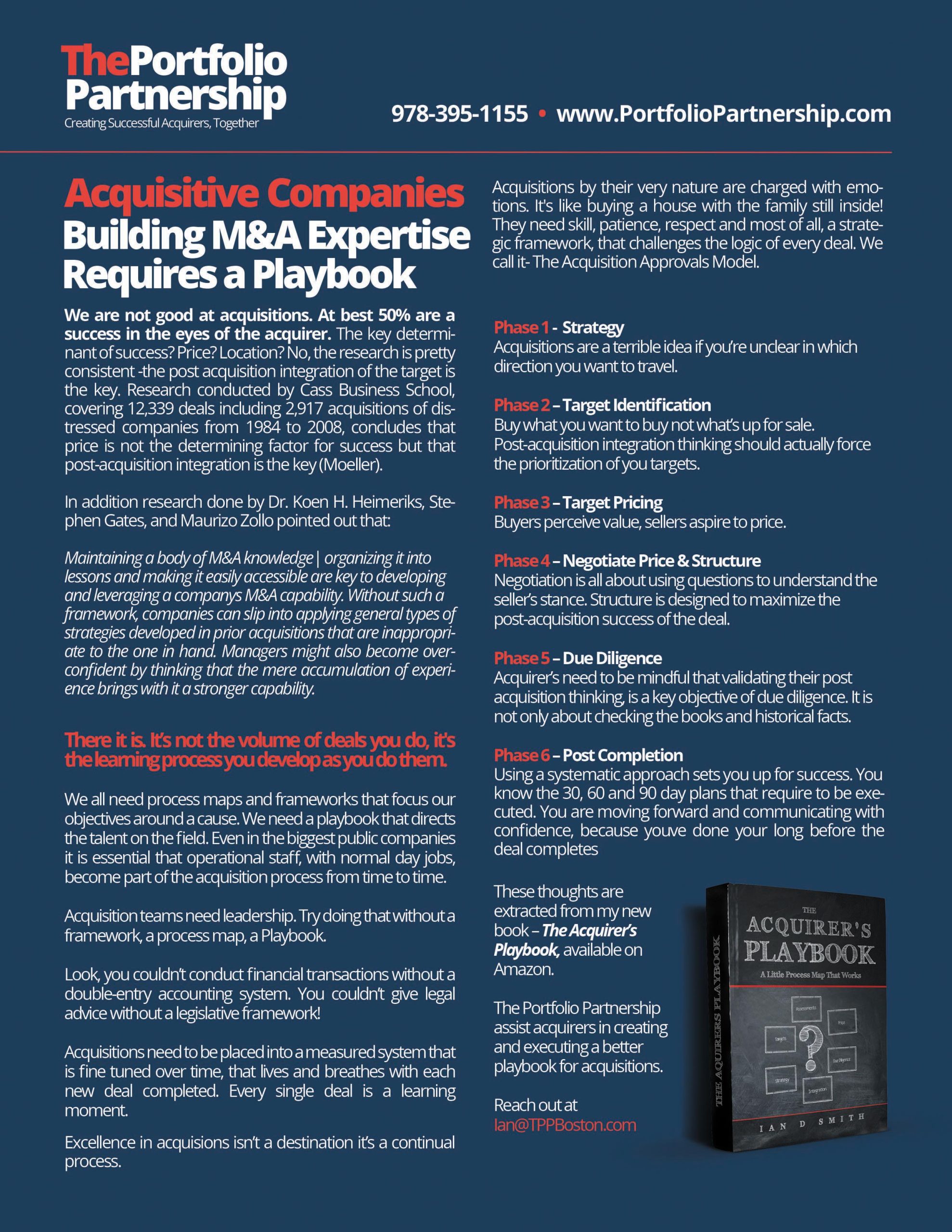
Another example could be M&A. You employ an investment banker to find a target and after months of negotiation you close a deal. However, the success of the acquisition requires an operational mindset. Did you build a post-acquisition plan long before the deal closed. Was an experienced operator involved in designing the implementation plan? Do you have an experienced operator in charge of the Integration Management Office (IMO) to drive the first 100 days post deal close?
Another example could be your financial dashboards. You upgrade your ERP system to Acumatica. An experienced consultant helps you implement the new system, and project manages the migration from the old system. But have you considered all the change management protocols to be embedded? Have you considered all the operational changes needed to make the system a sustainable success? Have timetables and playbooks been edited?
Operating Partners solve problems by looking at the long-term sustainable solution that will work in your organization with your staff. This is the stickiness difference between consultants and Operating Partners. The latter want the solution to be part of the fabric of the organization. Built into the muscle memory of the company.
Investing in outside resources should be an opportunity to mentor existing team members. It should build a stronger business in the long term, making the business safer and more sustainable. However, unless you factor post implementation of the project into your thinking you are likely to solve a problem today that will present challenges in the future.
The market now has choices. An external resource could be an experienced ex-operator that understands why solutions stick employed on a fractional basis to augment your team with extra bandwidth and expertise.
SUMMARY
In summary when procuring external help, ask yourself:
- Will my staff be developed during this process?
- Does the service include transformation of my processes?
- Does this solution offer me a short-term fix or a long-term systemic optimization?
- Are the people doing the work experienced operators who think the way I think?
- Are my costs fixed or wildly dependent on hours billed?
- Can I reference check the track record of the external team with respect to long term successful projects?
- Is this external team user friendly and would the chemistry work with my permanent leadership team?
Always available for a chat at Ian@TPPBoston.com.
Current strategic focus – Private company owners looking to exit in the next 2 years with EBITDA > $5m. Services here.